Three posts in one day is a record, but I wasn't planning on the Greed and Debt stuff and have wanted to write about "Henry IV, Part I," since last Sunday. Carol and I went to NYC to see ShakespeareNYC's production of what has been described as the best history play that will ever be written. We saw this play as part of seeing all of eight of Shakespeare's history plays in Stratford on Avon in February so it was a little bit of an adjustment to see it on a smaller scale in a small theater that had to be only about 25% full.
One thing that struck me was how difficult that must be for actors to perform before such an empty house. Supposedly Alan Howard once said something about actors about to go on stage having enough adrenalin to kill a horse or something like that. It must be incredibly frustrating to reach that emotional state, see such a small turnout and still deliver a top quality performance. I know as an amateur preacher, primarily of stewardship sermons, that I have gotten resentful and sometimes distracted by such small turnouts.
While it certainly wasn't the best production I have ever seen it is a great play and I get something out of it every time I see it. In this production the actor playing Falstaff did an especially good job with the "catechism" on honor - looking directly at audience members as he asked "Can honor heal a wound?" etc. It was very effective.
"Henry IV, Part I" is the first history play that I saw from beginning to end. My introduction to the history plays was the 1960's "Age of Kings" television series. My freshman English class at Wayne High School was told to watch it and I was the only one stupid enough to do so. Each play was divided into two sections and I came in for the second half of "Richard II" which I didn't like then and still don't like now probably because I dislike the title character so much.
Then the next week came the first section of "Henry IV, Part I" which I know included the great tavern scene. I know that because while there were no commercials in these shows there was an intermission and the host introduced the second section by saying something like "and now what you have all been waiting for, 45 minutes of Falstaff" or something like that. Well I hadn't been waiting for it and I didn't like Falstaff either, I thought him to be too silly, a strange idea for a 14 year old which probably says more about me than about anything else.
I think it was in large measure because probably without knowing it I had already begun my fascination with Hal later Henry V. I think in some way I understood the point of his soliloquy in Act I where he tells the audience that his wild behavior is all an act. So I still wasn't that impressed by the first section of this play, but the second section a week later hooked me for good. All the sections had sub titles this one was "The Road to Shrewsbury" and the host forewarned us that Shrewsbury was a battlefield.
I think it was the final confrontation between Hal and Hotspur that did it for me, not the physical fighting, but the speeches. Hotspur was played by Sean Connery and I have never seen a better one, Hal was played by Robert Hardy and he was good as well. One thing is for sure after that I looked forward to my hour plus each Monday with Shakespeare and the history plays - very strange for a high school freshman. There is still a lot more to say so there will be another post about this play, but certainly not today and probably not until Sunday.
Friday, September 19, 2008

Greed and Debt - The Corporate Side
I believe that greed and debt has a corporate side as well as a personal side. After all if a loan isn’t a good business transaction for the borrower, it probably isn’t a good transaction for the lender as well so why do such loans get made. Back in the early 1970’s went I began an 11 year banking career, there was a crisis around Real Estate Investment Trusts for REITs. The concept was that banks lent money to the REITs which, in turn, lent it out for real estate transactions.
The problem was that the REITS were lending the bank’s money to borrowers who the banks would not have lent to in the first place. So no one should have been surprised that as soon as the real estate market had problems that the REITS couldn’t collect from the borrowers and, therefore, the banks couldn’t collect from the REITS.
Banks, almost all of which are public companies in one way or another are always under pressure to show an increase in earnings. Banks earn money from loan interest so sometimes the only way to increase interest earnings is to increase loan volume and if there aren’t enough good borrowers then lenders go to the next level and so on. That’s greed in the corporate sense whether from market pressure or other reasons, the drive for profits leading lenders to do things that are not in anyone’s long term interest.
Something that is always forgotten in those situations is that one bad loan can offset the interest income on a large number of good loans. Interest after all is typically calculated at a rate of say, 10% of the principal. 10% on a $100,000 loan for a full year earns $10,000. As a result one $100,000 loan that is not repaid offsets the interest on ten good $100,000 loans or on one good $1 million loan.
Even without greed as a motivating factor some loans will not be collected, but typically those losses are limited. It is when greed, the desire for income overcoming the risks inherent in earning that income, is out of control that the bank or banks in question can get hurt in a big way. When such situations are widespread enough, then stockholders also get hurt.
The desire for financial success both corporate and personal is not a bad thing. It is a driving force in any free market economy and in the U.S. has created a higher standard of living for a greater percentage of the population than anywhere else in the world or in history. When greed sets in, however, at both levels, then tools like debt will most likely be used in destructive ways that can harm both individuals and corporations in some pretty serious ways.
How to prevent this or at least lessen the risk is not an easy thing to do. If it were, we wouldn’t have such crisis every so often. On the personal side leadership political and otherwise needs to emphasize sound economic values. One place this can come from is the church, since this is really a stewardship issue. On the corporate side adequate regulation is important. Something else that would be helpful would be less pressure to have earnings go up quarter after quarter, to recognize that sometimes lower levels of income aren’t as bad as major asset write offs. While I don’t have my hopes up, it would be nice if at least some progress could be made coming out of the current situation.
The problem was that the REITS were lending the bank’s money to borrowers who the banks would not have lent to in the first place. So no one should have been surprised that as soon as the real estate market had problems that the REITS couldn’t collect from the borrowers and, therefore, the banks couldn’t collect from the REITS.
Banks, almost all of which are public companies in one way or another are always under pressure to show an increase in earnings. Banks earn money from loan interest so sometimes the only way to increase interest earnings is to increase loan volume and if there aren’t enough good borrowers then lenders go to the next level and so on. That’s greed in the corporate sense whether from market pressure or other reasons, the drive for profits leading lenders to do things that are not in anyone’s long term interest.
Something that is always forgotten in those situations is that one bad loan can offset the interest income on a large number of good loans. Interest after all is typically calculated at a rate of say, 10% of the principal. 10% on a $100,000 loan for a full year earns $10,000. As a result one $100,000 loan that is not repaid offsets the interest on ten good $100,000 loans or on one good $1 million loan.
Even without greed as a motivating factor some loans will not be collected, but typically those losses are limited. It is when greed, the desire for income overcoming the risks inherent in earning that income, is out of control that the bank or banks in question can get hurt in a big way. When such situations are widespread enough, then stockholders also get hurt.
The desire for financial success both corporate and personal is not a bad thing. It is a driving force in any free market economy and in the U.S. has created a higher standard of living for a greater percentage of the population than anywhere else in the world or in history. When greed sets in, however, at both levels, then tools like debt will most likely be used in destructive ways that can harm both individuals and corporations in some pretty serious ways.
How to prevent this or at least lessen the risk is not an easy thing to do. If it were, we wouldn’t have such crisis every so often. On the personal side leadership political and otherwise needs to emphasize sound economic values. One place this can come from is the church, since this is really a stewardship issue. On the corporate side adequate regulation is important. Something else that would be helpful would be less pressure to have earnings go up quarter after quarter, to recognize that sometimes lower levels of income aren’t as bad as major asset write offs. While I don’t have my hopes up, it would be nice if at least some progress could be made coming out of the current situation.
Greed and Debt - Horsemen of the Economic Apocalypse
Like most people I have been paying attention to the crisis on Wall Street especially its potential negative impact upon our investments. While it is all very complicated on its most basic level I think it comes down to two things – greed and debt. These are problems both on the personal and the corporate level – first the personal.
I think that greed is one of those words that has become so caricatured that we think of it only in its extreme terms – Ebenezer Scrooge in literature and/or the way some of the rich are portrayed in the Gospels. Since few, if any of us, are like that there is a tendency to think that greed is not an issue either for us or for most of our society. Unfortunately I think that is a mistaken belief, greed exists in many different forms and at many different levels so that it is a risk in one way or another for all of us. I was trying to think of a more working definition of greed when by accident I found one in the September 19th issue of the New York Times.
It was the story of a judge’s struggles with finding the right sentence for a young drug dealer. The judge had asked the young man to put into writing what he was thinking of when he committed his crime. The young man wrote that when he started selling drugs he went from having no money one day to having $300 the next day. The money brought him status and respect blurring or wiping out any moral issues about the source of the new found wealth.
$300 is certainly not a huge amount of money so I think that a working definition of greed is that it is what happens when we give into temptation to acquire money or wealth in a way that is not sound. Fortunately there are limits on those who are tempted into criminal behavior. Unfortunately that is not the case with those who are tempted into debt.
The biggest potential for problems with debt rests with abusing credit cards and mortgage debt. These can be reasonable means for buying something we need that we can’t afford on one payment, but can afford to payoff gradually. That is the way debt can and should be used. The problems occur when we use credit cards with little thought of how we can pay it off the balance or when we use mortgage debt inappropriately in relationship to real estate.
Properly used the home mortgage has opened up the dream of owning a home to those who would never have had that opportunity. Unfortunately greed sets in when we incur excessive mortgage debt in order to buy a home that is really beyond our means. The same thing can be said of home equity loans or mortgage refinancing where the proceeds are again used for something we can’t afford and probably don’t need.
Such greed is not unlike that of the young dealer – the big difference is that what he did was against the law. But when we acquire more house than we could possibly need relying excessively on the “value” of the house and/or use the house to finance things that again we probably don’t need – greed has again taken over. Such greed accompanied by the debt that can fuel that greed can be the ruin of us and, in sufficient numbers, can put our whole society at risk.
I think that greed is one of those words that has become so caricatured that we think of it only in its extreme terms – Ebenezer Scrooge in literature and/or the way some of the rich are portrayed in the Gospels. Since few, if any of us, are like that there is a tendency to think that greed is not an issue either for us or for most of our society. Unfortunately I think that is a mistaken belief, greed exists in many different forms and at many different levels so that it is a risk in one way or another for all of us. I was trying to think of a more working definition of greed when by accident I found one in the September 19th issue of the New York Times.
It was the story of a judge’s struggles with finding the right sentence for a young drug dealer. The judge had asked the young man to put into writing what he was thinking of when he committed his crime. The young man wrote that when he started selling drugs he went from having no money one day to having $300 the next day. The money brought him status and respect blurring or wiping out any moral issues about the source of the new found wealth.
$300 is certainly not a huge amount of money so I think that a working definition of greed is that it is what happens when we give into temptation to acquire money or wealth in a way that is not sound. Fortunately there are limits on those who are tempted into criminal behavior. Unfortunately that is not the case with those who are tempted into debt.
The biggest potential for problems with debt rests with abusing credit cards and mortgage debt. These can be reasonable means for buying something we need that we can’t afford on one payment, but can afford to payoff gradually. That is the way debt can and should be used. The problems occur when we use credit cards with little thought of how we can pay it off the balance or when we use mortgage debt inappropriately in relationship to real estate.
Properly used the home mortgage has opened up the dream of owning a home to those who would never have had that opportunity. Unfortunately greed sets in when we incur excessive mortgage debt in order to buy a home that is really beyond our means. The same thing can be said of home equity loans or mortgage refinancing where the proceeds are again used for something we can’t afford and probably don’t need.
Such greed is not unlike that of the young dealer – the big difference is that what he did was against the law. But when we acquire more house than we could possibly need relying excessively on the “value” of the house and/or use the house to finance things that again we probably don’t need – greed has again taken over. Such greed accompanied by the debt that can fuel that greed can be the ruin of us and, in sufficient numbers, can put our whole society at risk.
Tuesday, September 16, 2008
Doing History - Talking History
There is going to be a break on posts on Jane Austen even though I am plowing through "Emma" and enjoying it a great deal. The reason for the break is first this post related to last Saturday's vintage base ball game in Trenton and at least one on "Henry IV, Part I." This past Saturday, the Eureka Base Ball Club returned to the field for the first time since July to play the Flemington Neshanock at Cadwalader Park in Trenton, a match sponsored by the Trenton Historical Society.
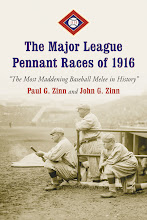
The location was of special interest to me since the field is located on Stuyvesant Avenue in Trenton and my mother, Ann Winder was born at 743 Stuyvesant in 1916 of all years (see "The Major League Pennant Races of 1916". I only remember a few visits to the row house where my mother was born and my grandparents lived for, I think, their entire married life of almost 50 years. The area right around 743 is in pretty bad shape, but when I passed last year, the house was still in good repair. The base ball field is at the far end of Stuyvesant and interestingly there are some really nice homes bordering the park - in some cases, large almost mansion like homes.
These homes were pointed out to me by Brad Shaw, founder of both the Neshanock and the Eureka and one of the moving forces for vintage base ball in New Jersey. Invariably at every vintage game I go to there is some discussion of history, both base ball and otherwise. On Saturday it started when a few of us arrived early and someone asked who the park was named after. He may have regretted the question because it got me started on explaining that Cadawalader was a revolution war general which led someone else to ask about the battles of Trenton and Princeton. That in turn gave me an opening to talk about the little known 2nd battle of Trenton, the day before the battle of Princeton.
That conversation about history was followed by one I had with Sam Bernstein the founder of the New Jersey chapter of SABR on some base ball topics. Then while I was "tallying" (scoring) the game, I was engaged in conversation by a park ranger about vintage base ball. I may have told him more than he wanted to know, but I don't think so as he kept asking questions. I also spent some time talking with one of my teammates on the Eureka about the ins and outs of researching and writing both Civil War and base ball history.
While it doesn't always take this form, every one of these games seems to lead into some discussion of history. In a way vintage base ball is a form of "object-based" learning, that is, learning from something other than a text book or a pure lecture. Perhaps this is just another example of how different forms of learning/education create/spark an interest in history that people may not even know is there. Come to think of it, watching a vintage base ball game is in some ways a form of of working with original source material.
The other thing to say is how much I have enjoyed this year with the Eureka, we have one more game scheduled for October, but it is not clear if it will come off. Regardless I have enjoyed every minute of it. Part of it is simply getting outside which I don't do often enough. Another part of it is getting back involved in a game that I have loved since I was a child, even though I am not playing. The Eureka is a great bunch of guys and we have had a lot of fun even though there haven't been a lot of wins. I am already looking forward to next year!!
The location was of special interest to me since the field is located on Stuyvesant Avenue in Trenton and my mother, Ann Winder was born at 743 Stuyvesant in 1916 of all years (see "The Major League Pennant Races of 1916". I only remember a few visits to the row house where my mother was born and my grandparents lived for, I think, their entire married life of almost 50 years. The area right around 743 is in pretty bad shape, but when I passed last year, the house was still in good repair. The base ball field is at the far end of Stuyvesant and interestingly there are some really nice homes bordering the park - in some cases, large almost mansion like homes.
These homes were pointed out to me by Brad Shaw, founder of both the Neshanock and the Eureka and one of the moving forces for vintage base ball in New Jersey. Invariably at every vintage game I go to there is some discussion of history, both base ball and otherwise. On Saturday it started when a few of us arrived early and someone asked who the park was named after. He may have regretted the question because it got me started on explaining that Cadawalader was a revolution war general which led someone else to ask about the battles of Trenton and Princeton. That in turn gave me an opening to talk about the little known 2nd battle of Trenton, the day before the battle of Princeton.
That conversation about history was followed by one I had with Sam Bernstein the founder of the New Jersey chapter of SABR on some base ball topics. Then while I was "tallying" (scoring) the game, I was engaged in conversation by a park ranger about vintage base ball. I may have told him more than he wanted to know, but I don't think so as he kept asking questions. I also spent some time talking with one of my teammates on the Eureka about the ins and outs of researching and writing both Civil War and base ball history.
While it doesn't always take this form, every one of these games seems to lead into some discussion of history. In a way vintage base ball is a form of "object-based" learning, that is, learning from something other than a text book or a pure lecture. Perhaps this is just another example of how different forms of learning/education create/spark an interest in history that people may not even know is there. Come to think of it, watching a vintage base ball game is in some ways a form of of working with original source material.
The other thing to say is how much I have enjoyed this year with the Eureka, we have one more game scheduled for October, but it is not clear if it will come off. Regardless I have enjoyed every minute of it. Part of it is simply getting outside which I don't do often enough. Another part of it is getting back involved in a game that I have loved since I was a child, even though I am not playing. The Eureka is a great bunch of guys and we have had a lot of fun even though there haven't been a lot of wins. I am already looking forward to next year!!
Friday, September 12, 2008
Jane Austen Part II - "Sense and Sensibility"

I am writing about Austen's first two novels in the order that I read them, not the order they were written. In the case of "Sense and Sensibility" I actually saw a movie version before I read the book which is very unusual for me. This was the movie with Emma Thompson and Kate Winset that came out about 1995. I read the book a few years later when I decided I wanted to read all of Austen's novels - I haven't made much progress over the past 13 years!
When I read the book, I was impressed with Austen's humor especially some cutting comments. With regard to one elderly woman, she wrote something like, she didn't say much because she had only as many words as she ideas - that was meant as a compliment in terms of limiting what one says. The other referred to Eleanor's silence in reaction to one of the male characters because "she didn't believe that he deserved the compliment of intelligent conversation." That may not be a direct quote, but it is pretty close and when I later read that Austen could be "wickedly funny," I knew what the critic meant.
Like most people, I think, I almost always prefer the book to the movie. The one thing that I thought was better in the movie was the handling of Eleanor's mistaken belief that Edward the man she loves has married someone else. I forget the specifics, but the explanation for Eleanor's error seemed quite contrived compared to that in the movie. Of course, some writing a screen play from a book, is to some extend almost editing someoneelse's work making it easier to adapt into something that is smoother.
As I think about it this is one rare case where I actually liked the movie as much as the book and certainly not for the above reason. Part that was the quality of the acting, but as I remember it the movie is very true to the book. Once I finish reading the remaining novels, I am going to watch at least one version of each and see how I feel. I don't have much more to say about "Sense and Sensibility," but will probably make up for in my next post about "Mansfield Park."
When I read the book, I was impressed with Austen's humor especially some cutting comments. With regard to one elderly woman, she wrote something like, she didn't say much because she had only as many words as she ideas - that was meant as a compliment in terms of limiting what one says. The other referred to Eleanor's silence in reaction to one of the male characters because "she didn't believe that he deserved the compliment of intelligent conversation." That may not be a direct quote, but it is pretty close and when I later read that Austen could be "wickedly funny," I knew what the critic meant.
Like most people, I think, I almost always prefer the book to the movie. The one thing that I thought was better in the movie was the handling of Eleanor's mistaken belief that Edward the man she loves has married someone else. I forget the specifics, but the explanation for Eleanor's error seemed quite contrived compared to that in the movie. Of course, some writing a screen play from a book, is to some extend almost editing someoneelse's work making it easier to adapt into something that is smoother.
As I think about it this is one rare case where I actually liked the movie as much as the book and certainly not for the above reason. Part that was the quality of the acting, but as I remember it the movie is very true to the book. Once I finish reading the remaining novels, I am going to watch at least one version of each and see how I feel. I don't have much more to say about "Sense and Sensibility," but will probably make up for in my next post about "Mansfield Park."
Tuesday, September 9, 2008
Jane Austen - Part I - Pride and Prejudice

In yesterday's post about English novels I wrote that I read "Pride and Prejudice" in Junior English at Wayne High School and that I didn't have that much of a reaction to it. Some 45 years later, however, I still remember three things that Mr. Ruffing said about it:
1. In reading the novel you would never know that England was involved in a life and death struggle with Napoleon.
2. Mr. Bennett has little or nothing to do every day.
3. Mr. Bennett's strange comment at the end that of all his young men (his daughter's husbands), Wickham is his favorite.
Not sure what all of that means, but I still remember it.
I had decided to read the novel again as part of my quest to read all of Jane Austen, but couldn't get started in it until a friend of mine's daughter was reading it - again in Junior English. She had to write a journal about it and asked for my help. So over about 10 days, I read it, we talked about it and she wrote her journal. The whole process of asking her questions about how she felt about different characters and events and then encouraging her to write those in journal was very energizing.
It helped me understand why "Pride and Prejudice" is such a timeless work - even with the more stilted class structure of Georgian England, all the issues of relationships, love/marriage etc. can still relate to today. To be honest a large part of what appeals to me about English fiction is just that the relationships and how they work out. During high school I had little success with relationships then embarked on eight years of monastic like existence (all male college, all male graduate school, followed by the army) 10-12 years with very little in the way of relationships.
I think that experience has made me interested in how relationships play out in fiction. Part of it is my desire to see happy endings, but it is also to see which ones work out, which ones don't, what obstacles have to be overcome and if they are. One of the things I found fascinating about "The Duke's Children" was trying to figure out how the equation of two male lead characters and three female characters would work out. There was going to be an unhappy ending for someone, the question was who. Besides being honest, it was more dramatic and kept my attention, almost like waiting to see how a mystery comes out.
In "Pride and Prejudice" all of the endings were either happy or deserved - Wickham and Lydia being an example of the latter. Since we know Jane Austen never had a happy ending perhaps it is understandable that she would write them in her novels. Certainly the same thing happens in "Sense and Sensibility" which I will write about next.
1. In reading the novel you would never know that England was involved in a life and death struggle with Napoleon.
2. Mr. Bennett has little or nothing to do every day.
3. Mr. Bennett's strange comment at the end that of all his young men (his daughter's husbands), Wickham is his favorite.
Not sure what all of that means, but I still remember it.
I had decided to read the novel again as part of my quest to read all of Jane Austen, but couldn't get started in it until a friend of mine's daughter was reading it - again in Junior English. She had to write a journal about it and asked for my help. So over about 10 days, I read it, we talked about it and she wrote her journal. The whole process of asking her questions about how she felt about different characters and events and then encouraging her to write those in journal was very energizing.
It helped me understand why "Pride and Prejudice" is such a timeless work - even with the more stilted class structure of Georgian England, all the issues of relationships, love/marriage etc. can still relate to today. To be honest a large part of what appeals to me about English fiction is just that the relationships and how they work out. During high school I had little success with relationships then embarked on eight years of monastic like existence (all male college, all male graduate school, followed by the army) 10-12 years with very little in the way of relationships.
I think that experience has made me interested in how relationships play out in fiction. Part of it is my desire to see happy endings, but it is also to see which ones work out, which ones don't, what obstacles have to be overcome and if they are. One of the things I found fascinating about "The Duke's Children" was trying to figure out how the equation of two male lead characters and three female characters would work out. There was going to be an unhappy ending for someone, the question was who. Besides being honest, it was more dramatic and kept my attention, almost like waiting to see how a mystery comes out.
In "Pride and Prejudice" all of the endings were either happy or deserved - Wickham and Lydia being an example of the latter. Since we know Jane Austen never had a happy ending perhaps it is understandable that she would write them in her novels. Certainly the same thing happens in "Sense and Sensibility" which I will write about next.
Monday, September 8, 2008
English Novels
I finally finished "Mansfield Park" last night bringing me half way to reading all of Jane Austen's novels or at least the ones she finished. More on that particular novel later, but finishing it made me think of how much I enjoy English novels, primarily from the 19th century and some in the 20th century (let's say pre 1950). I have never read anything from before 1800, but I hope to put those on the list.
I started to wonder about exactly how I got interested in the English novel. I have told anyone who would listen about how the TV series "An Age of Kings" got me interested in Shakespeare's history plays, but I don't have that kind of clarity about the novel. I think it started in Mr. Ruffing's class of Junior English at Wayne High School. When I wrote about "Beowulf" recently, I noted that class which was a survey class of British Literature - "Beowulf" to "The Wasteland" was how it was advertised.
When I think about my education, I think mostly about my experiences at Rutgers, but I should be more conscious and more grateful for the education that I got at Wayne. Mr. Ruffing's class came just at the right time for me after I got interested first in the history plays and then in English history. His class was the place where I got introduced to the English novel, that year we read "Lord Jim," "The Return of the Native," "Pride and Prejudice," and supposedly "Tom Jones."
I say supposedly "Tom Jones" because for some reason I refused to read it. While most people have stories of books that they read only through Sparks Notes or Cleff Notes or even Classic Comics, "Tom Jones" was the only book of all those assigned throughout high school and college that I didn't read. For some reason, and it certainly wasn't something I thought about, I decided it was too long and read only the Cleff Notes and didn't really suffer because of it. Ironically a movie version of the book came out that year and was very favorably reviewed making me realize that I missed something. I still haven't read it, but I will.
Unlike the history plays, being exposed to those books did not pique my interest in English novels. I found "Lord Jim" unreadable and had to go to the Classic Comic to understand it (I did read the book too). I liked "The Return of the Native" and was kind of neutral about "Pride and Prejudice." In college, we read "Our Mutual Friend" freshman year and I did like that although I don't think I understood that much of it.
But at some point, for reasons I don't understand, it changed and I love reading these novels and the longer the better - again why "Tom Jones" length turned me off, I can't explain. Perhaps it is one of those things that can't be explained, but should just be enjoyed. In my postings about the Palliser novels, I wrote about why I like Trollope, my next two posts are going to be about Jane Austen and "Mansfield Park," and I will try to write about why I like her novels. Perhaps that kind of reflection can lead to a wider understanding - not that's crucial, but it might be interesting - at least to me.
I started to wonder about exactly how I got interested in the English novel. I have told anyone who would listen about how the TV series "An Age of Kings" got me interested in Shakespeare's history plays, but I don't have that kind of clarity about the novel. I think it started in Mr. Ruffing's class of Junior English at Wayne High School. When I wrote about "Beowulf" recently, I noted that class which was a survey class of British Literature - "Beowulf" to "The Wasteland" was how it was advertised.
When I think about my education, I think mostly about my experiences at Rutgers, but I should be more conscious and more grateful for the education that I got at Wayne. Mr. Ruffing's class came just at the right time for me after I got interested first in the history plays and then in English history. His class was the place where I got introduced to the English novel, that year we read "Lord Jim," "The Return of the Native," "Pride and Prejudice," and supposedly "Tom Jones."
I say supposedly "Tom Jones" because for some reason I refused to read it. While most people have stories of books that they read only through Sparks Notes or Cleff Notes or even Classic Comics, "Tom Jones" was the only book of all those assigned throughout high school and college that I didn't read. For some reason, and it certainly wasn't something I thought about, I decided it was too long and read only the Cleff Notes and didn't really suffer because of it. Ironically a movie version of the book came out that year and was very favorably reviewed making me realize that I missed something. I still haven't read it, but I will.
Unlike the history plays, being exposed to those books did not pique my interest in English novels. I found "Lord Jim" unreadable and had to go to the Classic Comic to understand it (I did read the book too). I liked "The Return of the Native" and was kind of neutral about "Pride and Prejudice." In college, we read "Our Mutual Friend" freshman year and I did like that although I don't think I understood that much of it.
But at some point, for reasons I don't understand, it changed and I love reading these novels and the longer the better - again why "Tom Jones" length turned me off, I can't explain. Perhaps it is one of those things that can't be explained, but should just be enjoyed. In my postings about the Palliser novels, I wrote about why I like Trollope, my next two posts are going to be about Jane Austen and "Mansfield Park," and I will try to write about why I like her novels. Perhaps that kind of reflection can lead to a wider understanding - not that's crucial, but it might be interesting - at least to me.
Subscribe to:
Posts (Atom)