Thursday, October 2, 2008

"It's All Stewardship"


Earlier today I posted the stewardship sermon that I preached at St. Paul's in Paterson this past Sunday. Stewardship has been an interest of mine a long time. While some may consider it another word for fundraising to me stewardship is best defined as "What I do after I say I believe" and "Everything that I do with everything I have all of the time" - both well know stewardship definitions.
This year at St. Paul's we have broadened our focus somewhat to look more at our stewardship of everything we have - thus the connection to the parable of the talents. So far I have had interesting conversations with a number of parishioners about both the importance and the difficulty of good financial management. It seems clear that as a church we need to spend more time on this. If so one thing that I think that is essential is that we teach that good financial management begins with giving - only if we give away enough (whatever that is for us) can we expect to manage all of our finances well.

One thing that was unusual about this year's sermon was that I preached it three times, twice in English and once in Spanish. I have preached in English twice in one day many times and also have preached in Spanish before, but never all three in one day. In fact it was the first time I had ever been to three church services in one day which was exhausting by itself. I think it went all right, the primary goal was to have the same message at all three services - I still think that is a good idea.

The experience once again made me reflect on the fact that I am bi-lingual, able to communicate effectively in both English and Spanish - listening in Spanish is still a challenge. I took four years of Spanish in High School and two more in college. The reason I took Spanish (for some reason I wanted to take French) was that my father had supposedly studied Spanish and he could help me with the language. Looking backward I don't know why anyone thought that was a good idea, but it certainly never materialized.

While I studied Spanish for six years, I really hadn't used much from 1966 until about 2000. it is amazing how much of it I retained which is due to my memory - I am both blessed and cursed with an exceptional memory. It is a gift, certainly not something that I earned. This experience was different because this was the first time that I had to practice the same sermon in two different languages. For obvious reasons, I had to spend more time on the Spanish, but I found that when I turned to the English version I really didn't have to practice it that much - practicing it in Spanish helped me with the English version.

My parents made the decision that I would study Spanish almost 50 years ago without having any way of knowing how it would be useful to me a half century later. Who would have known I would have ended up in an urban church in a predominantly Latino city. This reminded me of a similar decision that my parents made. They decided that I would take typing in high school so that I could type my papers in college - a sound decision that certainly helped me in college and graduate school. Who could have foreseen, however, the development of the personal computer utilizing the same key board as those old manual typewriters. It has certainly aided my computer skills immeasurably.

It underscores for me how important the decisions are that we make about our children's education. Sometimes like my parents case in ways that we can never foresee. Other decisions such as picking a private high school or college can have clear cut and immediate impacts. How we work with our children on their education may be one of our most important contributions to their lives. In this, as in so many things, there are no easy answers, but one thing I do know committing the time and energy to it increases dramatically the chances of making a crucial difference. How parents are stewards of their time to this end can help our children to steward their time to great benefit.

Sermon Preached at St. Paul's Church, Paterson, New Jersey - 9/28/2008


Knowing What We Don’t Know

This year’s stewardship program is somewhat different from the past. In most years the role of the congregation is sort of reactive. The congregation listens closely to the sermons (we hope) carefully reads the written material (we hope), and then makes intentional stewardship decisions (we also hope). This year, however, we are asking the congregation to take a more active role. Specifically everyone in the congregation asked to do three things:

1. Write down five things that are priorities and values in our life.

2. Keep track of our expenses for the month of September, both the money we spend by check and how we spend the cash that we take out of the bank.

3. Finally compare our expenses with our values and priorities. This is very important because our expenses say a lot about our values and priorities no matter what we may think our priorities are.

The stewardship committee recommended this approach to the vestry. In agreeing to this idea, the vestry believed that they should lead by example. So the vestry has already done this exercise for the month of August. At our September vestry meeting, we spent at least a half-hour talking about what we had learned. Everyone agreed that it was worthwhile and that everyone in the congregation should do it as well.

One thing that came out of our discussion that the vestry especially wanted me to pass on is that it is very important to know how we spend our cash. Since it is already the end of September, if we haven’t kept a record it is possible that we don’t have that information. If not the suggestion is to do that for October or November so as to have the full benefit of the process.

So the vestry would like us to do this. Of course we will all do it then – correct? After all what more reason could we need to comply. I have been an Episcopalian too long to believe that it could be that simple. I think we need to believe that there will be some real benefit to us in doing this work, I would like to talk about what I think that benefit is.

I believe that when we do this exercise all of us will find some area where our expenses do not match our priorities. I also believe that we will be surprised by at least one way that this is true. This means that we will understand something that we didn’t understand before or in other words, we will know what we don’t know.

Knowing what we don’t know is some of the most valuable information we can have. Let me share an example. About two years ago I was tutoring an adolescent, a friend of mine’s son in American history. We were studying the American Revolution and he didn’t understand why the colonists wanted to be independent of Great Britain. I tried a number of different approaches and he still didn’t understand. Finally I asked him if he knew what a colony is and he said know he didn’t.

Once I knew what he didn’t know it became easy to solve the problem. I asked him if there were ever times when he thought he could make his own decisions, but his parents didn’t agree with him. He is an adolescent so of course, he said yes. I explained to him that it is the same thing with people living in a colony, they think they can make their own decisions without the help of the mother country. I hope I didn’t start a revolution in that family, but the point is that when I knew what he didn’t know I could help him change from not knowing to knowing.

This same principle applies to our money. Once we know what we don’t know about spending and priorities, we can change. If we are talking about change, we are also talking about choices – at the heart of stewardship is making good choices. Look at today’s Gospel reading – what is important is not the amount of money each man has, but the choices they make. The third man’s error is his choice especially a choice to do nothing.

I am not trying to suggest that we all have the same choices, but stewardship is not about what we do in relationship to anyone else – it is about our choices. How much money we have is not important, whether we have more or less money than others is not important, whether we have more or less expenses is not important, what is important are the choices that we make with the money we do have. At the heart of the Gospel’s message about stewardship is that we make good choices. We have a much better chance of doing that when we know what we don’t know.

Tuesday, September 30, 2008

Henry IV, Part II, Part III


After posting about the talk back performance that Carol and I saw last Wednesday I realized that I still hadn't said a lot about the play itself. I was a little surprised at the beginning of the talk back when Beverly Bullock asked if anyone had ever seen Part II before. She went on to say something about it not being performed very much or more typically conflated into Part I. That question is more commonly asked with regard to the Henry VI plays which are even less seldom performed both in England and in the US. The RSC's highly successful production that we saw in England (all three plays in one day - 9+ hours) has probably increased people's exposure to those plays, but I still think more people have seen Henry IV Part II.

There has been a lot scholarly speculation about why there are two parts to Henry IV. Some think it was originally intended to be one play, but there was too much material. Part of this is due to the fact that Part I ends with Hal having "redeemed the time" through his performance at Shrewsbury, but throughout Part II he is still seems to be in trouble with his father. Back when I first saw these plays in 1960-61 I read somewhere that Shakespeare wrote Part II because Part I was so much fun and I have always like that explanation.

After seeing Part II as part of Age of Kings I hadn't seen it again until this year. Back in 2003 we saw the Lincoln Center production of Henry IV which was a conflation of the two plays. I can understand why that is tempting for directors and producers. While Part I is by far superior, probably because it is the best history play ever written, there is a lot of good stuff in Part II especially towards the end. Since, as Peter Saccio once commented, little seems to happen at the beginning, it is fairly easy to cut a lot of it and tack the balance on to Part I. That probably is what temped Orson Welles to go that route in "The Chimes at Midnight," a conflated version of the two plays. I have only seen a few parts of that, but to me it was ghastly.

Anyway after having not seen Part II for over 40 years I have seen it three times in 2008. First on the BBC video with David Gwillim and Anthony Quayle in anticipation of our trip to England, then in England at the RSC and finally at Shakespearenyc. I have to say that the play has grown on me. While not as funny as Part I, the interaction between Falstaff and the Chief Justice is funny and the scenes in Gloucestershire are priceless. At the RSC production the actors playing Shallow and Silence were excellent when Shallow gave the "Hem boys" watchword, he suddenly raised his voice causing Silence to fall off his bench. Benjamin Curns who played Falstaff at the Shakespearenyc I thought, said the famous "We have heard the chimes at midnight" line better than I have heard it before. I am still waiting to hear someone do Feeble's passage, "We all owe God a death . ." the way I think it should be said.

Then, of course, there is Henry IV's soliloquy on sleep ending with the most famous line ever written about kingship, "Uneasy lies the head that wears a crown," all of which is a lead into the death bed scene and the transition of Hal to Henry V. As everyone knows the climax of the play is Hal's, now Henry V, rejection of Falstaff. I have now seen it played a number of different ways, David Gwillim played it in a way that was consistent with his treatment of Falstaff throughout both plays. Geoffrey Streatfeild played it reluctantly, knowing he had to do it, but seemingly reluctant to do so. He conveyed that by hesitating for a long time before saying the fateful - "I know you not. . ." In the talk back in New York Brian Morvant said that his reading of the part was similar to Geoff's (we're old friends - a Falstaffian like claim on my part!) although it wasn't as obvious from the way he played it or at least not to me.

The rejection is in large measure what determines people's reaction to Hal and even Henry V. One thing that I have noticed just recently is that the rejection isn't quite as complete and cold as one might think. Henry calls on Falstaff to repent as he has repented offering him possible future access if he does so. In addition he also offers to provide some sort of pension so that Falstaff is not reduced to poverty. If we look at Falstaff objectively somehow getting past his attractive features it is possible to see that he got better than he deserved.

If any evidence is needed of Shakespeare's brilliance it can be seen in how he took one play, the anonymous "Famous Victories of Henry V" and made it into three plays each of which is packed with fascinating stuff. Part II is an important part of what has been called the Henriad, something I appreciate much more than I did at the beginning of 2008.

Friday, September 26, 2008

Henry IV Part II - Talking Back


We intentionally went to the performance of Part II that was a talk back night. This is the first time we had ever been to something like this, but it was not the first time we had a chance to interact with Shakespearean actors. When we were in England in February and March to see the history plays at the RSC, we went to church on the second Sunday we were there and by a combination of luck and nerve introduced ourselves to Geoffrey Streatfeild who played Hal/Henry V. Besides getting my picture taken with him, I had a brief moment to ask him if he found Hal/Henry V a sympathetic character and he said he did.


On Wednesday night there was a woman who checked our tickets at the door, who I though not unnaturally was the usher. I was more than a little surprised when at the end of the play, she came on to the stage to lead the talk back - it turns out that she was Beverly Bullock, the director. A few minutes later she was joined by some of the actors, happily Brian Morvant who played Hal, but unfortunately not Falstaff, Henry IV and/or Hotspur.


As with Part I unfortunately the audience was small and only a few people stayed for the talk back. The good news was that it gave me and one other person the chance to ask several questions and, to some extent, to have a dialogue. One of the major issues of the Henry IV plays is one's reaction to Hal's rejection of Falstaff at the end of Part II. It always seems to me that those who reject Hal because he rejects Falstaff are in the majority. However I seem to be running into more and more people who feel sympathize with Hal.


To some extent this is accepting a traditional view that Hal is basically slumming in order to learn about the people he will lead as king. Taken to its logical conclusion this view means that the Battle of Agincourt as portrayed in Henry V was won not on the playing fields of Eaton, but in the taverns of Eastcheap. At some level that sounds too simple, but I do think that in the history plays Shakespeare is exploring national leadership especially as it relates to the common people.


Anyway both Beverly Bullock and Brian Morvant seemed to find Hal to be a sympathetic character. In talking about Hal rejecting his friend/friends, Brian made an interesting point that he can think of times in his own life that he walked away from friends which he regretted, but felt he had to do. At some level that is part of being human and perhaps something that should be avoided in any evaluation of Shakespeare's portrayal of a character is thinking he should be more or less than human.


I suggested that perhaps in the scene where Falstaff learns Hal is king, the reason Shakespeare has Falstaff say outrageous things like, "the laws of England are at my feet" or something like that, is to emphasize that kind of behaviour can never be countenanced. Beverly Bullock also pointed out that that may be the reason for the short scene in between the one just mentioned and the rejection where Doll Tearsheet and Mistress Quickly are arrested for their role in a murder. I have never understood that scene, it is dropped from a lot of productions, and the explanation certainly makes sense.


Something else that Beverly said that I have heard before is that it is possible that Shakespeare lost control of Falstaff. That as Shakespeare wrote the part, the character became so funny and so attractive that we risk losing sight of all the terrible things he does. For example, in each play, he takes bribes to excuse some men from battle, taking instead misfits who he cares little about.


One final thing that we learned was that the actors had only four weeks to rehearse both plays. I can't imagine doing one play based on four weeks rehearsal much less two and if there were cuts in these productions it wasn't that noticeable. We really enjoyed ourselves at both productions and plan to see their Hamlet in February as well as Henry V and Henry VI later in 2009. In each case making the talk back night the preferred date!

Henry IV Part II - Fathers and Sons

As mentioned earlier, Carol and I saw Shakespearenyc's production of Henry IV, Part II this past Wednesday night after seeing Part I about 10 days earlier. In my second post on the first play I briefly mentioned how Part I has a lot of content about fathers and sons. In fact this is true of both plays.

Back in 2003 I took a graduate level course at Montclair State on the history plays which was my first in depth reading of these plays in years. When I read Part I I was struck by the famous confrontation between Hal and his father. This is the scene that follows after the great tavern scene where Hal and Falstaff act out what it is going to be like when Hal faces his father at the court. For all the laughter in the tavern scene, the next scene cannot be enjoyable to Hal as his father basically chews him up one side and down the other.

By this time in my own life I had lived out the son's role and also the father's role. That is, I had been on both the receiving and giving end of such chewings out. Although in the play we are aware that Hal's wild side is primarily play acting what permeates the scene is a father not being quite sure of whether his son will measure up and the son trying to defend himself. In the BBC version when John Finch accuses David Gwillian of basically being on the rebels side, the shocked outrage in Gwillian's face is evident as he says -"Do not think it so, you shall not find it so!"

In spite of Hal's performance on the battlefield at Shrewsbury, Hal is still under the same cloud in Part II. This is most evident in the famous death bed scene where Hal walks off with the crown in the mistaken belief that his father is dead. Understandably Henry is outraged leading to another vicious verbal attack on his son - "Couldst thou not forbear me half an hour." This is after saying to Hal's brothers - "Son's what things you are." When we saw the Lincoln Center production in 2003 with Kevin Kline as Falstaff there was a noticeable murmer throughout the audience when Henry spoke those lines.

Hal's response, of course, restores him to his father's favor so that Henry can give his son his last words of advice. In the BBC version when David Gwillian (Hal) starts defending himself, the look on John Finch's face (Henry IV) said to me - "here I was so sure I was right, I was wrong and now I have been so cruel to my son." I am confident that I am not the other father who had those same feelings on at least one occasion. Jumping to a conclusion only to be proven wrong and to bitterly regret what I said. Parenthood gives us a lot of power - almost arbitrary power, years later memory and hindsight can generate a lot of guilt about how that power was used or perhaps mis-used.

Similarly in that version when Henry does die, the look on Hal's face is one of - "I knew this would come, but now the reality really hits home." I saw this version sometime after my own father died in November of 2002 and I could identify with the look on Gwilian's face as soon as saw it. I am not trying to exaggerate the change, but there is a change, if nothing else becoming the older generation, the holder of the family's history and tradition. I probably said this before, but it shows why these plays are so timeless, they can be read or heard on many levels and the issues are still relevant and will always be relevant.

Thursday, September 25, 2008

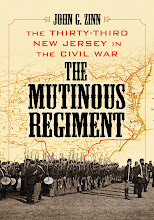
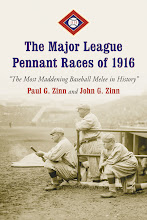
Books By John Zinn


Henry IV, Part I - Part II

Almost a week since my last post and I wanted to write a second post on Henry IV, Part I before moving on to Part II which Carol and I saw last night. I have written before about how the history plays especially Part I were my introduction to English literature. While this may seem obvious I think how we are introduced to Shakespeare (and I am sure other things as well) makes a big difference.

This became very clear to me a year or so ago when I started helping a friend's son with his school work. He attends a private all male school and their introduction to Shakespeare as freshman was "Romeo and Juliet." This might make some sense based on the age of the doomed lovers and the young love aspect of the play, but I really don't think this is the best way to introduce adolescent young men to Shakespeare.

Whether or not single sex education is a good idea or not is another question. But once that decision is made it seems to me that it opens up possibilities in some areas such as choosing their introduction to Shakespeare. Given those circumstances it seems to me that Part I of Henry IV would be ideal. It is after all about young men - Hal and Hotspur, but especially Hal.

There is a great deal in this play (and in Part II) about the relationships between fathers and sons. None of us today, of course, are princes being prepared to inherit the crown, but almost all of us have some relationship with our fathers where we are preparing and they are preparing us to become adults - to become senior members of the next generation of the family. As a result the relationship between Hal and his father, the need for learning responsibility and the temptation of the tavern are all issues that are relevant to the lives of young men.

This is not to suggest that they are irrelevant to young women, but I think there can be differences in how each gender approaches these issues. This is especially true in a single sex school, it seems to me that part of the reason for their existence is the opportunity to focus on relevant issues in that kind of environment. In such situations, plays like Henry IV Part I can play at least two roles. It provides a forum and/or a process for discussing those issues and it can serve as an introduction to Shakespeare that can change one's life - it certainly did mine. After beyond the great language, the drama etc. etc., one of the reason Shakespeare continues to matter is because the issues he explored continue to matter.

I would love to have the opportunity to conduct an experiment in a school like the one in question here. In the experiment when it came time to teach Shakespeare in freshman English I would teach Henry IV, Part I to one class while the other classes would do Romeo and Juliet or whatever else they think is appropriate. The primary goal of the experiment would be to see which play develops the higher level of interest. My money is on Henry IV, Part I.